
“Intranet readiness” is not an inherent state driven by AI, but rather a framework related to organizational preparedness for an intranet. In other words, do you have the resources to execute successfully? Intranet readiness often evaluated using methodologies developed by experts like Toby Ward. “Intranet readiness” is part technology, but mostly people and process (including change management). Ward, founder of the intranet consulting firm Prescient Digital Media, has developed various methodologies, white papers, and consulting services to help organizations assess their own intranet readiness by focusing on key ingredients like people, process, and technology. He argues that true intranet success requires a significant commitment of resources, strategic planning, governance, and content management, with technology serving only as an enabler.
Organizations can measure their intranet readiness by considering the following aspects, often highlighted in intranet experts Prescient’s intranet consulting:
- People: Great intranets require skilled people and dedicated executive champions. User needs and requirements must be the central focus, and employees creating content need proper training.
- Process: This includes establishing clear rules and guidelines for content creation, formatting, classification, review, and deletion. Strong governance, defining roles and responsibilities, is crucial.
- Planning: Successful intranets require comprehensive planning that considers strategy, functional requirements, content, design, and search functionality.
- Technology: While important, technology is the “easy part” and merely enables the people and processes. The focus should be on selecting the right platform and tools that support the organization’s specific needs, such as HR functions, collaboration tools, or mobile access.
- Content: The intranet should be the single, central location for all corporate documents, news, and announcements, making information easily accessible and searchable.
In essence, Toby Ward’s approach suggests that readiness is not just about having the technology, but ensuring the organization has the necessary human and process-based foundations to support a valuable and effective business system.
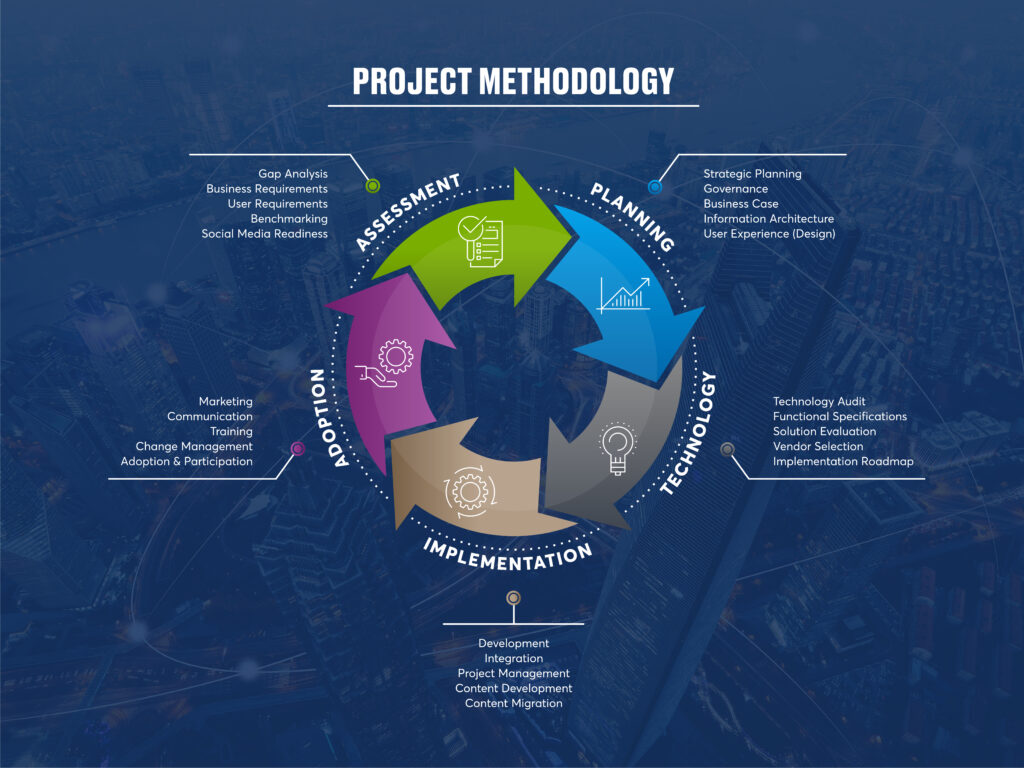
The Intranet Project Methodology, developed over and during 12 years working with nearly 200 intranets, takes into account the best practices of the World’s best intranets, and some of the very worst. It is a unique methodology developed specifically for intranets, though equally applicable to websites, and social intranets — because a social intranet has the same needs, requirements, and end employee users as a traditional intranet with the only difference being ‘social’ capabilities.
The Intranet Methodology includes all activities to begin planning, designing, and constructing and implementing a high performance intranet solution – including assessment or evaluation activities (sometimes referred to as ‘discovery’) as well as all of the planning activities ranging from the high-level strategic plans, to the detailed tactical requisites such as the site wireframes and information architecture.
Assessment
Assessment serves two important functions: it documents the needs and requirements of the user population and those of the business and its stakeholders while aligning project goals with corporate goals and objectives. This phase usually includes:
- a heuristic and strategic intranet evaluation (gap analysis)
- business requirements analysis (and stakeholder interviews)
- user research (reviews, survey(s), focus group(s), usability testing, log analysis)
- technical infrastructure analysis
- benchmarking and best practices
Planning
Planning incorporates both the strategic vision and the functional plan and maps out the planning and tactical steps for designing the intranet or digital workplace portal including:
- the high-level vision and/or mission
- specific goals and objectives
- governance / management model
- key performance indicators (KPIs)
- business case and ROI
- content management planning & policies
As well, detailed tactical plans are drafted, including:
- the functional plan
- site or portal information architecture
- page wireframes
- design concepts
- usability testing
- social media policies
Technology
Prescient Digital Media does not use a proprietary technology for building or constructing client intranet sites or intranet portals. We are ‘technology neutral’ which means that we will work with you to identify the appropriate technology solution based on your business requirements, and not “who we know” or based on reselling agreements and commissions. Though we have years of deep experience working with SharePoint and other commercial and open source products, we do not represent nor sell any product.
In identifying the best solution for your organization we manage all aspects of the vendor process including the evaluation and selection of the vendor, negotiate technology licenses and fees, project manage the implementation, and even manage and execute ongoing site operations including custom content development and translation services.
The output of these phases constitutes the Intranet Blueprint for guiding the implementation of the intranet or portal and the underlying governance and technology foundation. The Intranet Blueprint contains the map or blueprint for implementing a new social intranet or enterprise portal.
Finally, the Intranet Blueprint serves as the basis for evolving your site, establishing baseline targets (e.g. user satisfaction, ROI, etc.) for measuring its ongoing and future performance, and achieving its potential and value.
Also read: How To Hire An Intranet Consultant
You can learn more through resources from the intranet consultants‘ Prescient Digital Media website.